Chapter 1: Yellow
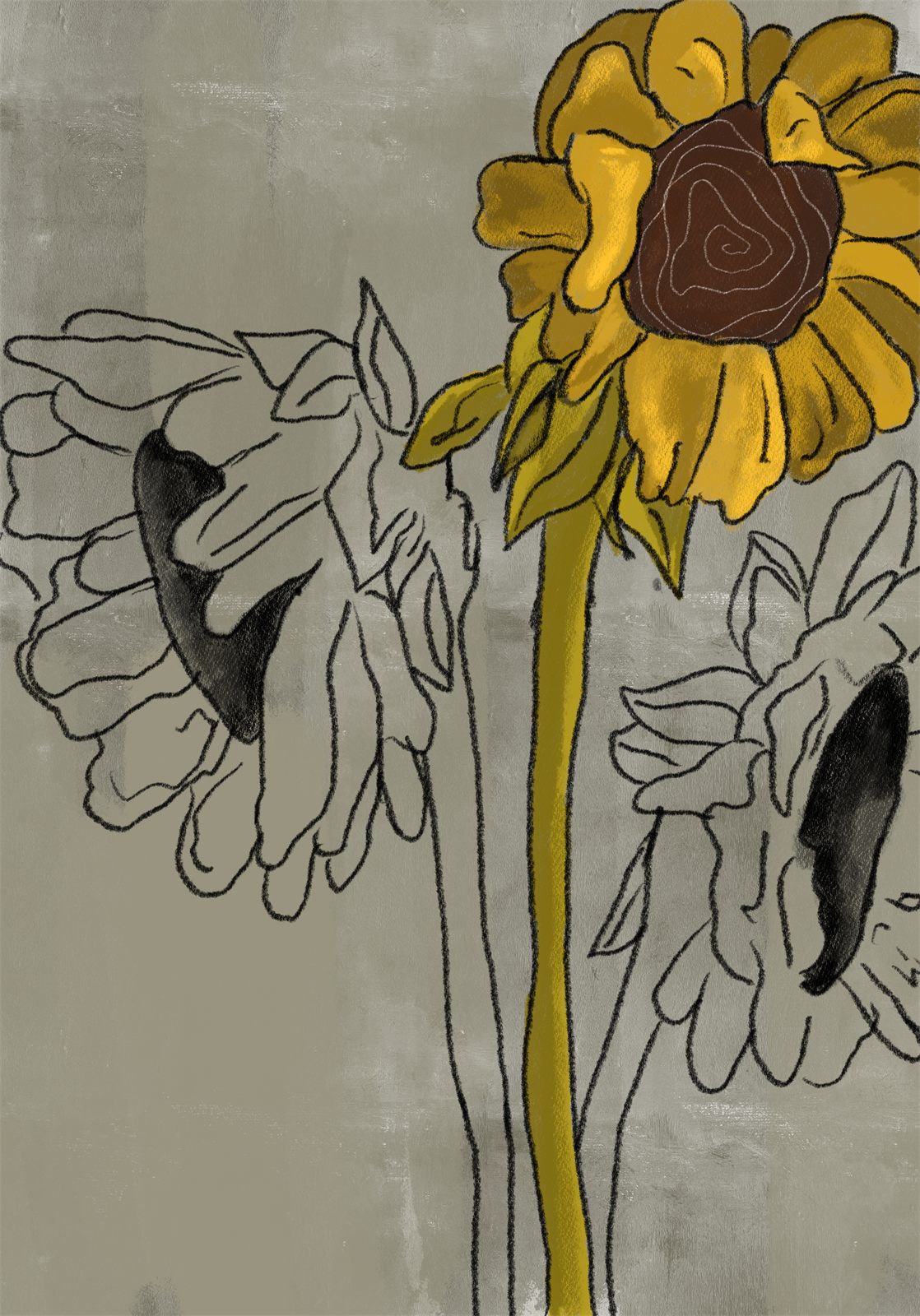
“No me quería ir nunca, y como nadie me estaba viendo, corté una de las flores de su tallo y me la robé. Me la guardé y me la llevé. Para sentirla. Para tenerla de un lado al otro. Para que su olor nunca se me vaya.”
“I never wanted to leave, and since no one was watching, I cut one of the flowers from its stem and stole it. I kept it and carried it with me. To feel it. To have it with me wherever I went. So its scent would never leave me.”
In this chapter, the protagonist finds himself in a field of sunflowers, where he decides to take one with him, to keep it close, to smell it, to feel it. At the center of the composition, I drew three sunflowers, but only one of them has color, symbolizing the love he has found — something that had previously felt like it belonged to another world.
Chapter 2: Sky Blue
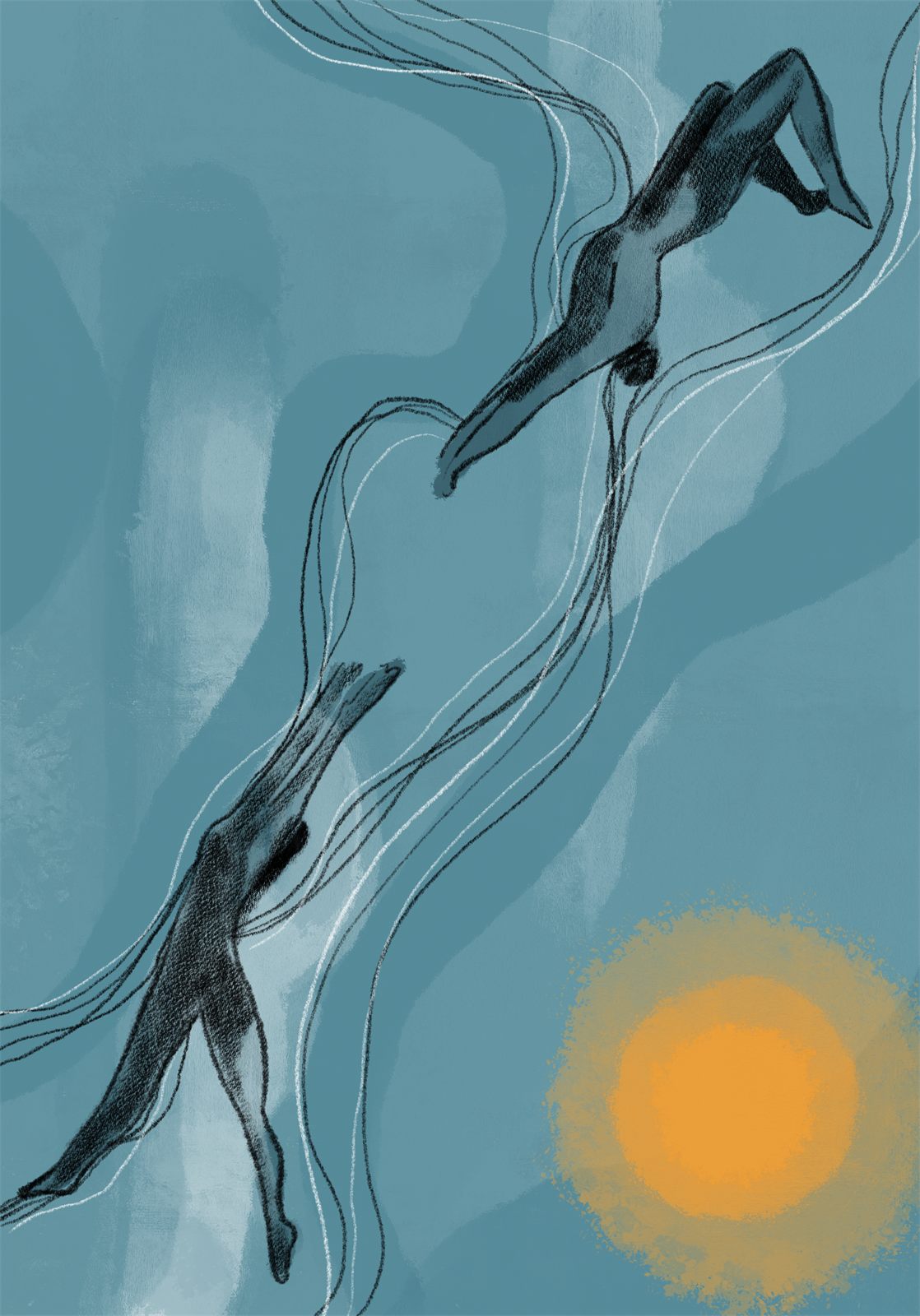
The chapter describes the experience of falling in love. At first, falling in love is presented as a feeling of calm and peace, an absence of noise and movement, which gradually transforms into a tension that keeps rising until it reaches ecstasy — described as touching the sun. A state of happiness that overwhelms the individual, where the sense of time is lost and the joy of falling in love comes paired with an intense, insatiable desire — a demand for more and more.
The first thing I thought when I read this was... like swimming through the sky.
Chapter 3: Blue
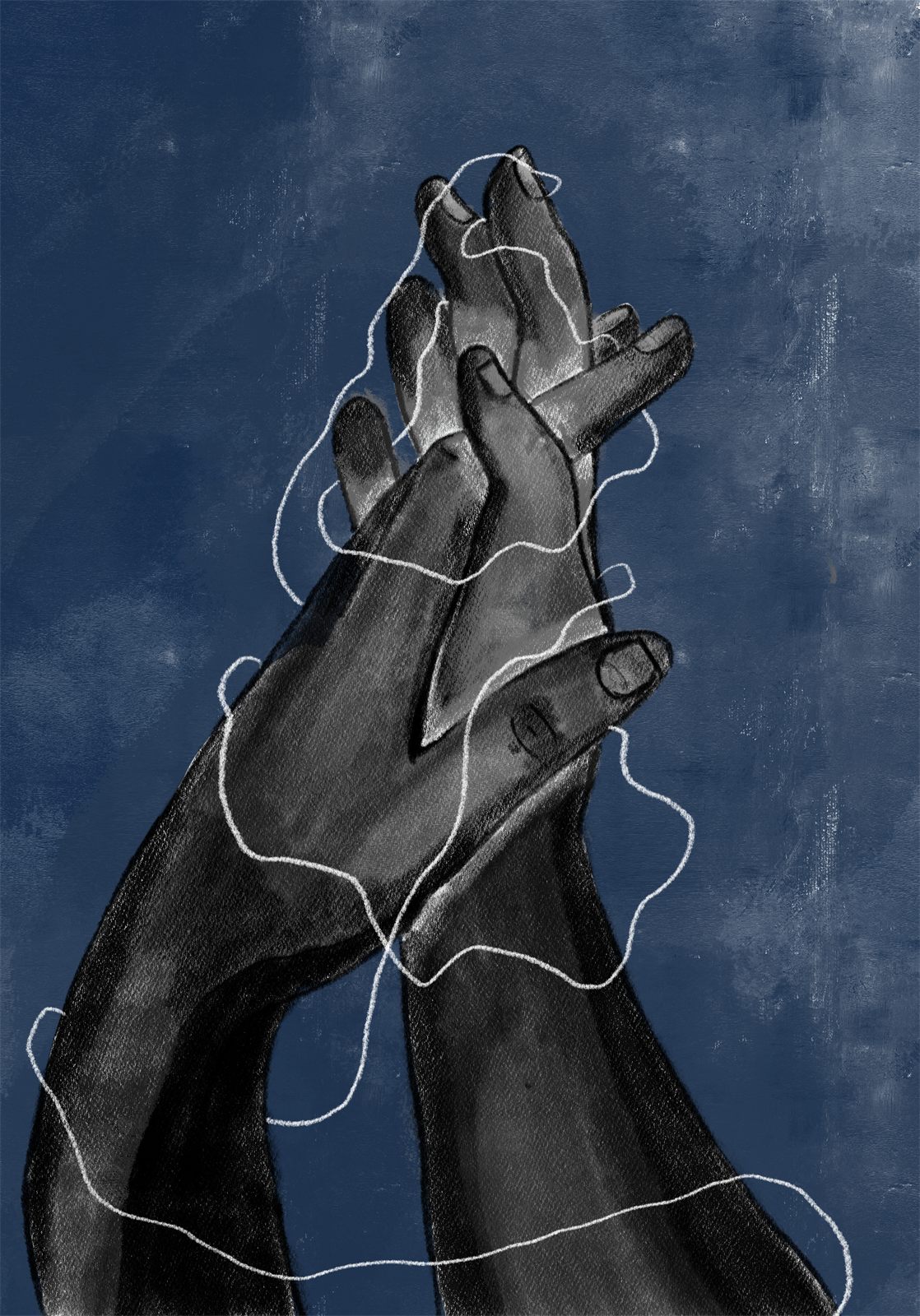
“Cuando dejas de bordear y empiezas a hundirte en algo más grande que vos mismo.
Ese sentimiento de cuando te abres a otro mundo. Te expones a alguien. Tanto que lo único que separa sus sentimientos de los tuyos es un poco de aire y unas cuantas palabras.”
“When you stop skirting the edge and start sinking into something bigger than yourself.
That feeling of opening yourself up to another world. Exposing yourself to someone. So much so that the only thing separating their feelings from yours is a little air and a few words.”
For this illustration, I drew inspiration specifically from how the chapter opens, "Surface. n. The boundary or limit of a body, which separates and distinguishes it from what it is not," and from how this boundary seems to disappear when two worlds merge into one. But at the same time, it reappears when barriers, doubts, and changes arise — when you don't know what's going on in the other person's head, and you start noticing subtle changes or traits in them.
Chapter 4: Salmon
“¿Cómo le dices?
A tu paz entre segundos. Al silencio que más querías escuchar. A tu busca y encuentra.
A ese intercambio entre lo que querías y lo que necesitabas. A la inspiración que tanto buscabas.
Al pensamiento que no para de dar vueltas en tu cabeza. Ese periodo entre horas pesadas. Esas tardes que se parecen más a una pintura que a nada. A tu golpe de suerte.”
“Mi aventura sin regreso, mi viaje sin camino, mi locura sin límite.”
“What do you call it?
Your peace between seconds. The silence you most wanted to hear. Your search and find.
That exchange between what you wanted and what you needed. The inspiration you searched so hard for.
The thought that won't stop spinning in your head. That stretch between heavy hours. Those afternoons that look more like a painting than anything. Your stroke of luck.”
“My adventure with no return, my journey with no road, my madness with no limit.”
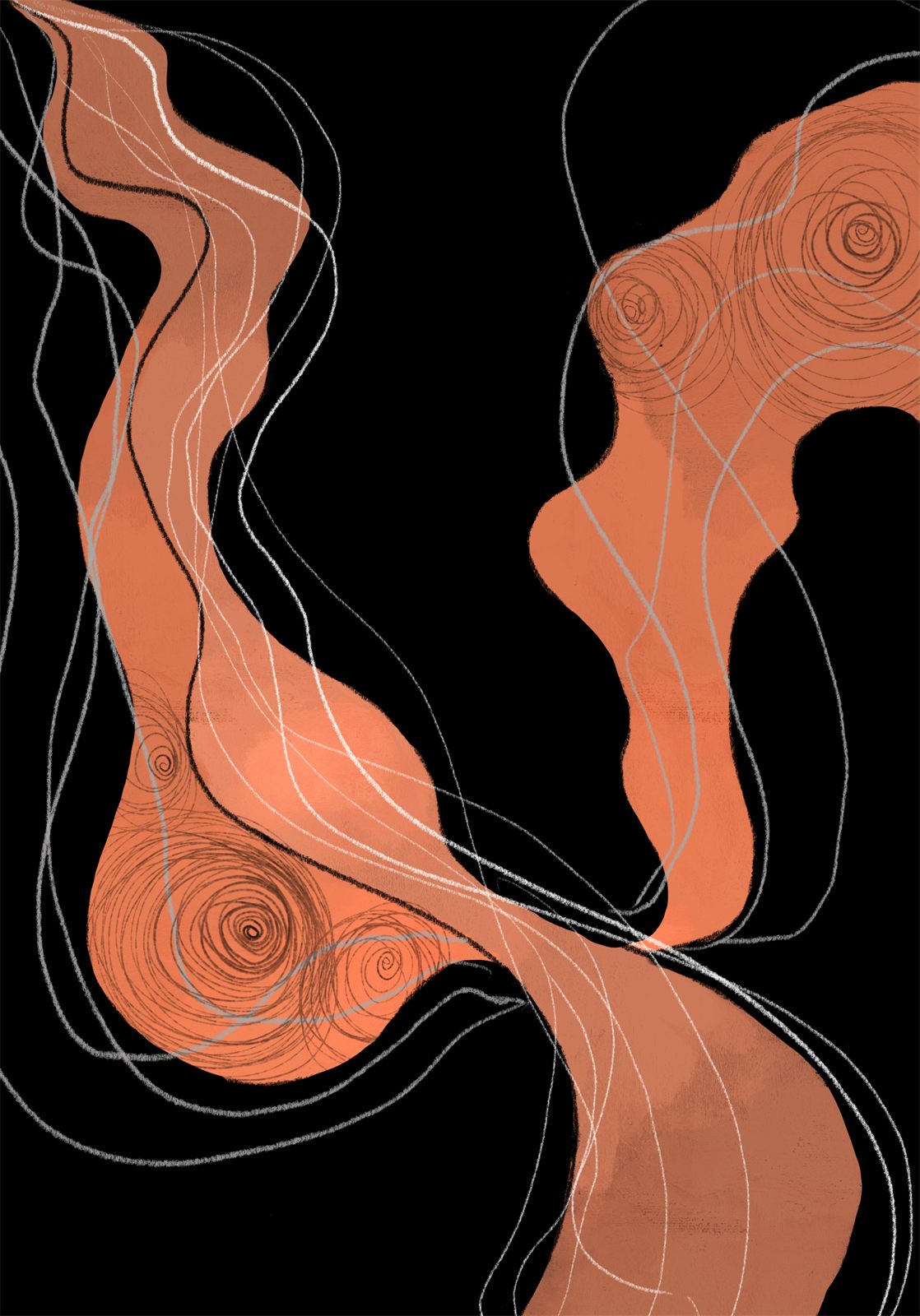
The chapter explores the difficulty of finding the right words to describe feelings and experiences. The author uses rhetorical questions and comparisons to explore this idea, and despite the limitations of language, the simple act of trying can be a meaningful way to connect and express.
For this illustration, I used a black background to symbolize the depth and intensity of the emotions explored in the chapter. At the same time, I used fluid lines in salmon and white to represent the fluidity and complexity of feelings, which can't always be filed into defined categories. The absence of figures or concrete elements in the illustration reflects the difficulty of putting the experiences and feelings described in the text into words — letting each reader interpret the illustration personally, connecting it to their own experiences and emotions, and inviting contemplation and reflection.
Chapter 5: Beige
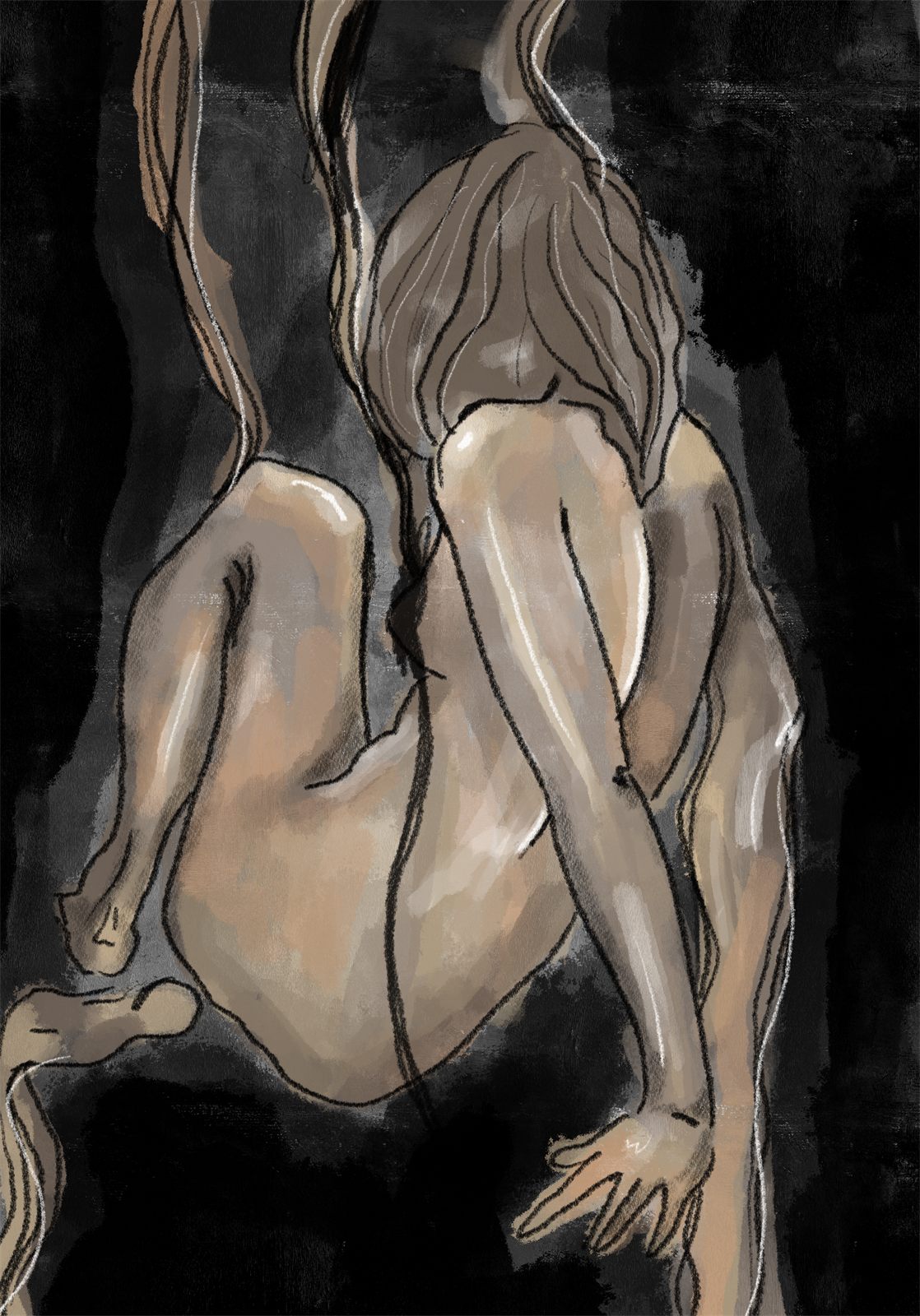
“You're the reason I am sad, you know?”
Chapter 6: Honey
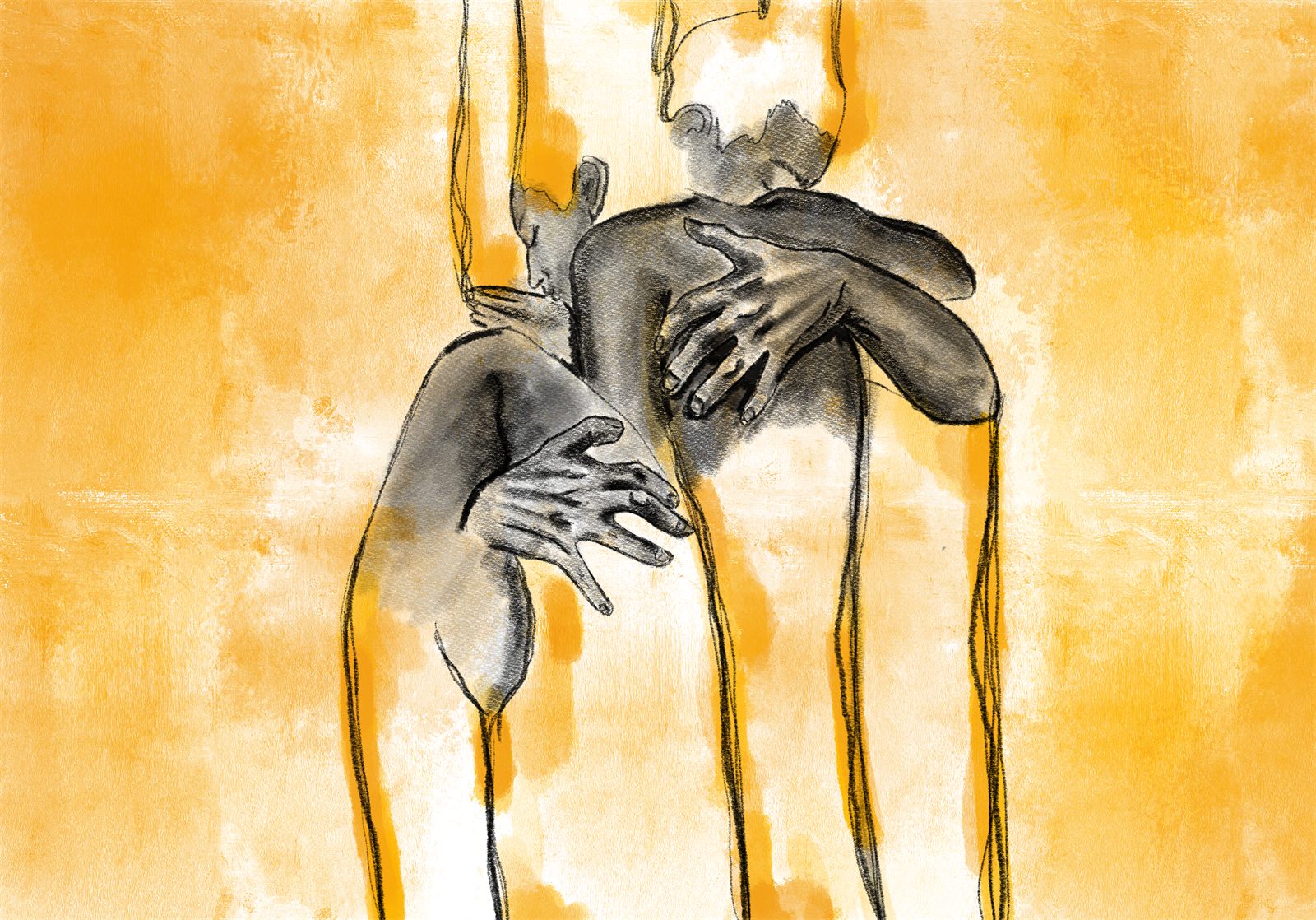
“Porque es simple, hemos cambiado. Y no te quieres dar cuenta.
Antes estar perdidos contigo era todo lo que quería. Ahora es lo que me da miedo.
Creo que el tiempo pasa oye. Y las personas también. Por más que no lo quieras.
"Todo pasa"
Y eso nos incluye, ¿no?”
“Because it's simple, we've changed. And you don't want to see it.
Before, being lost with you was all I wanted. Now it's what scares me.
I think time passes, you know. And so do people. However much you don't want it to.
"Everything passes"
And that includes us, doesn't it?”
Chapter 8: Red
“Una vez le dije a una chica que seríamos para siempre. Y si lo dije fue porque lo sentía. Porque sentía que "nunca jamás" era el final más romántico que existía.
La parte de la promesa que fue arriesgada no fue la que le hice a ella. Sino la que me hice a mí.”
“I once told a girl that we would be forever. And if I said it, it's because I felt it. Because I felt that "never ever" was the most romantic ending there was.
The risky part of the promise wasn't the one I made to her. It was the one I made to myself.”
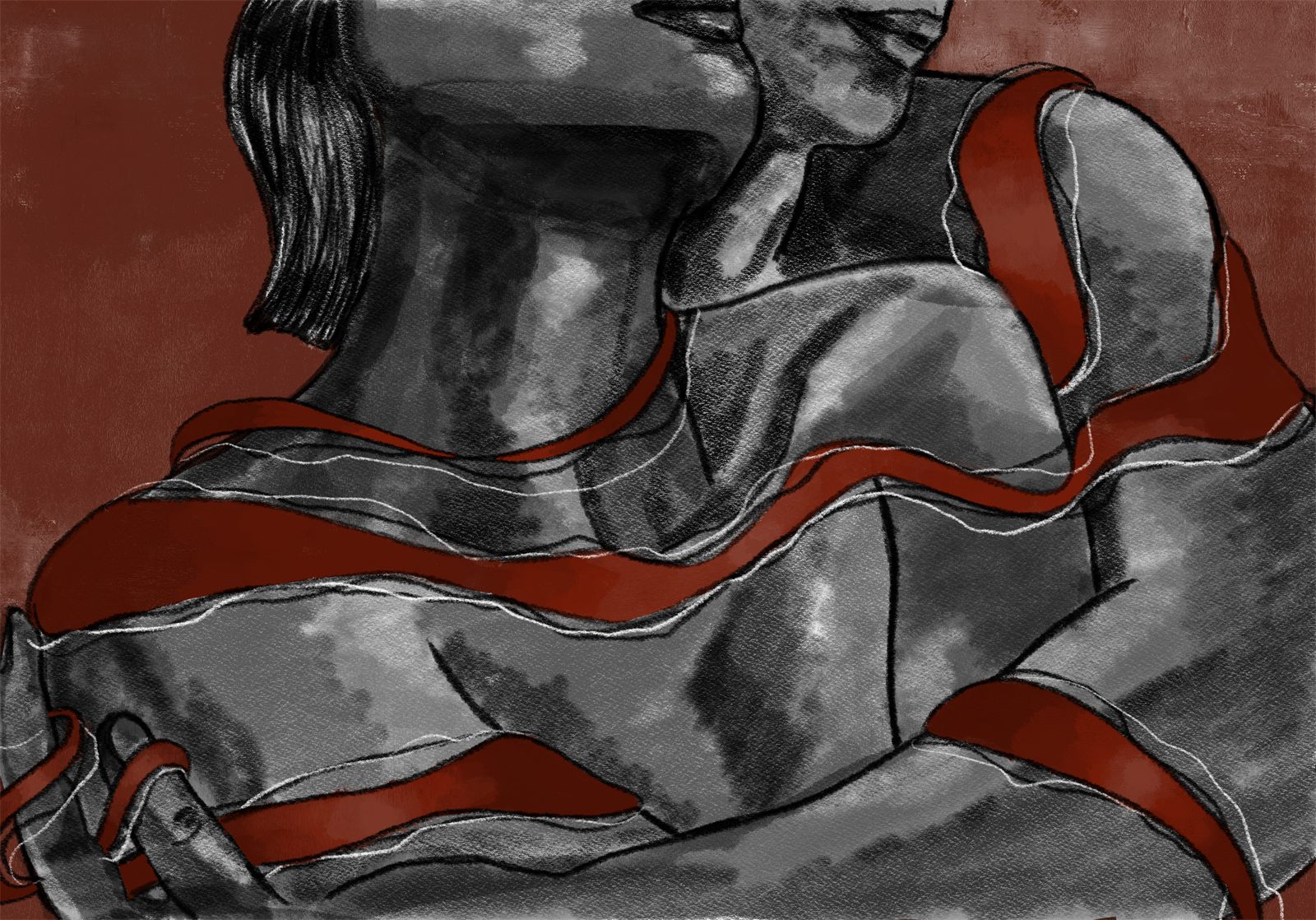
The chapter explores the idea of fate and eternal love through the legend of the red thread.
Chapter 9: Coffee
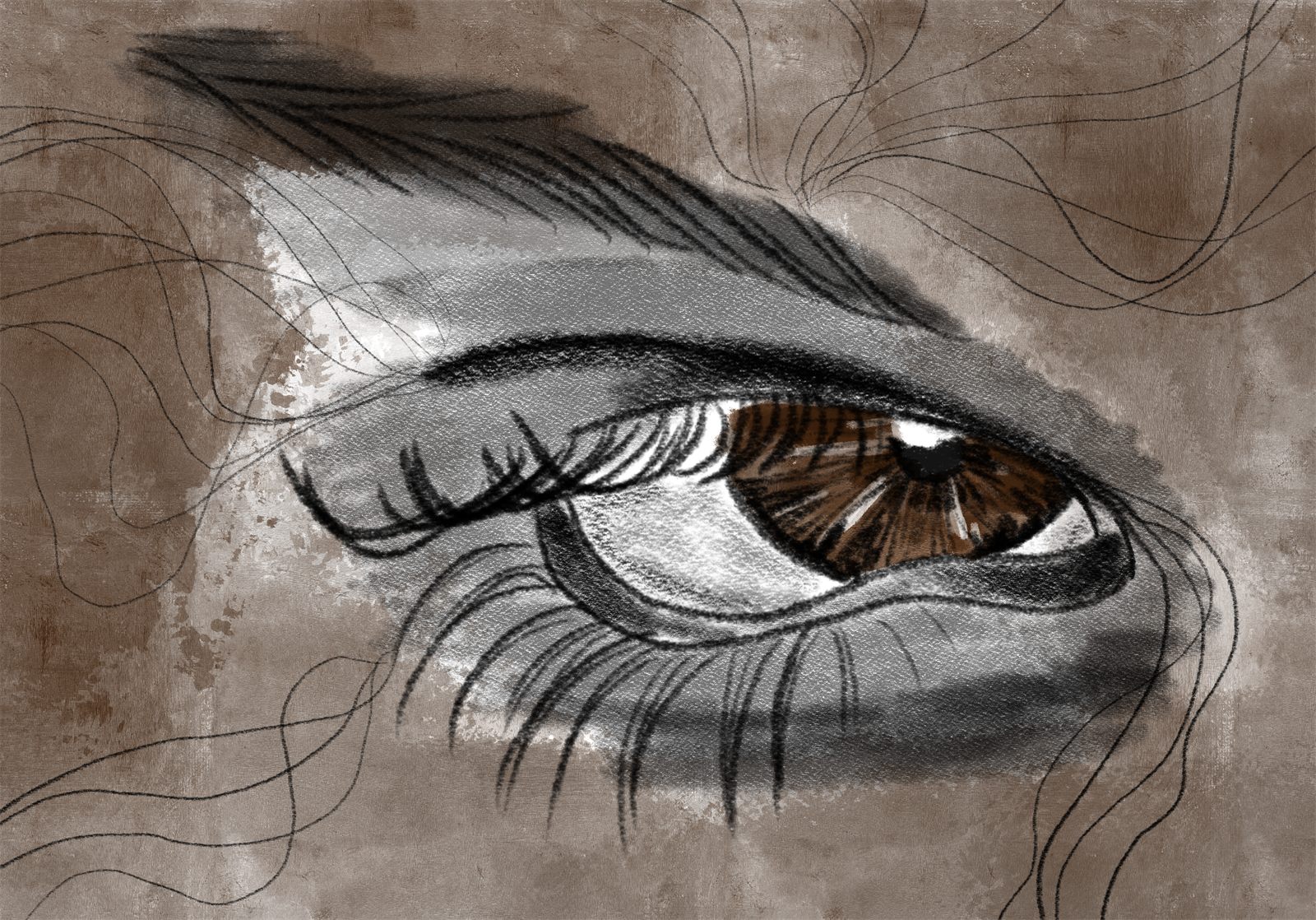
“Café es el color de tus ojos. Dos lunas. Uno un poco más claro que el otro. Y no me pueden soltar ahora. Ni cuando cierro los míos. Y eso me asusta. Porque esta vez cuando los abra ya no van a estar. Porque estamos diciendo adiós, y nunca te escuché decirlo así. Tal vez ya es muy tarde para retractarse, ¿no?”
“Coffee is the color of your eyes. Two moons. One a little lighter than the other. And they won't let go of me now. Not even when I close mine. And that scares me. Because this time, when I open them, they won't be there anymore. Because we're saying goodbye, and I'd never heard you say it like that. Maybe it's already too late to take it back, isn't it?”
“Yo seguía convenciéndome de que la vida es corta, solo para que así la idea de tenerte para siempre no parezca tan difícil.”
“I kept convincing myself that life is short, just so the idea of having you forever wouldn't seem so hard.”
Chapter 10: Cinnamon
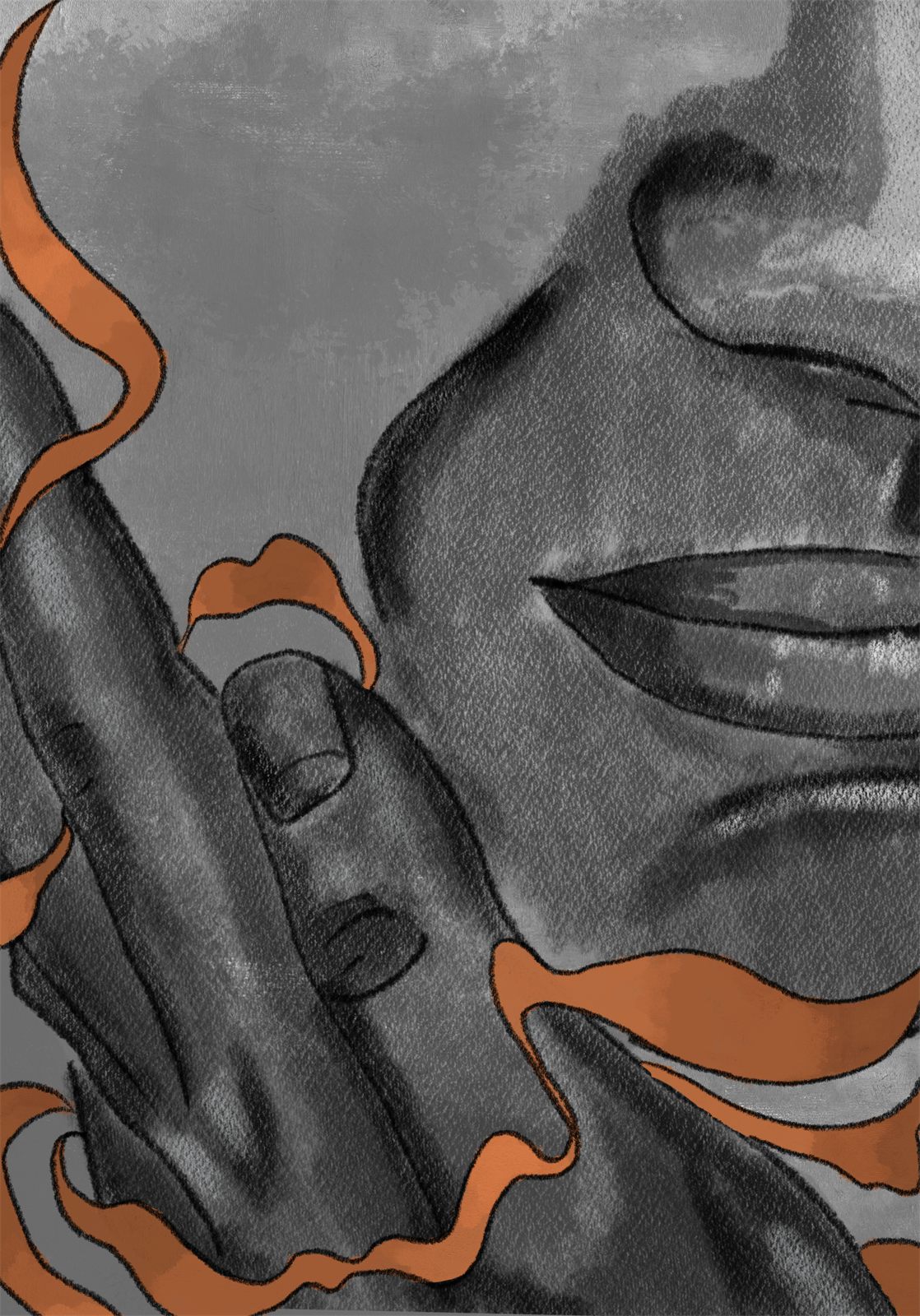
“olvidarme de ti para que no sigas apareciendo en mis sueños.”
“forgetting you so you'd stop showing up in my dreams.”
Chapter 11: Black
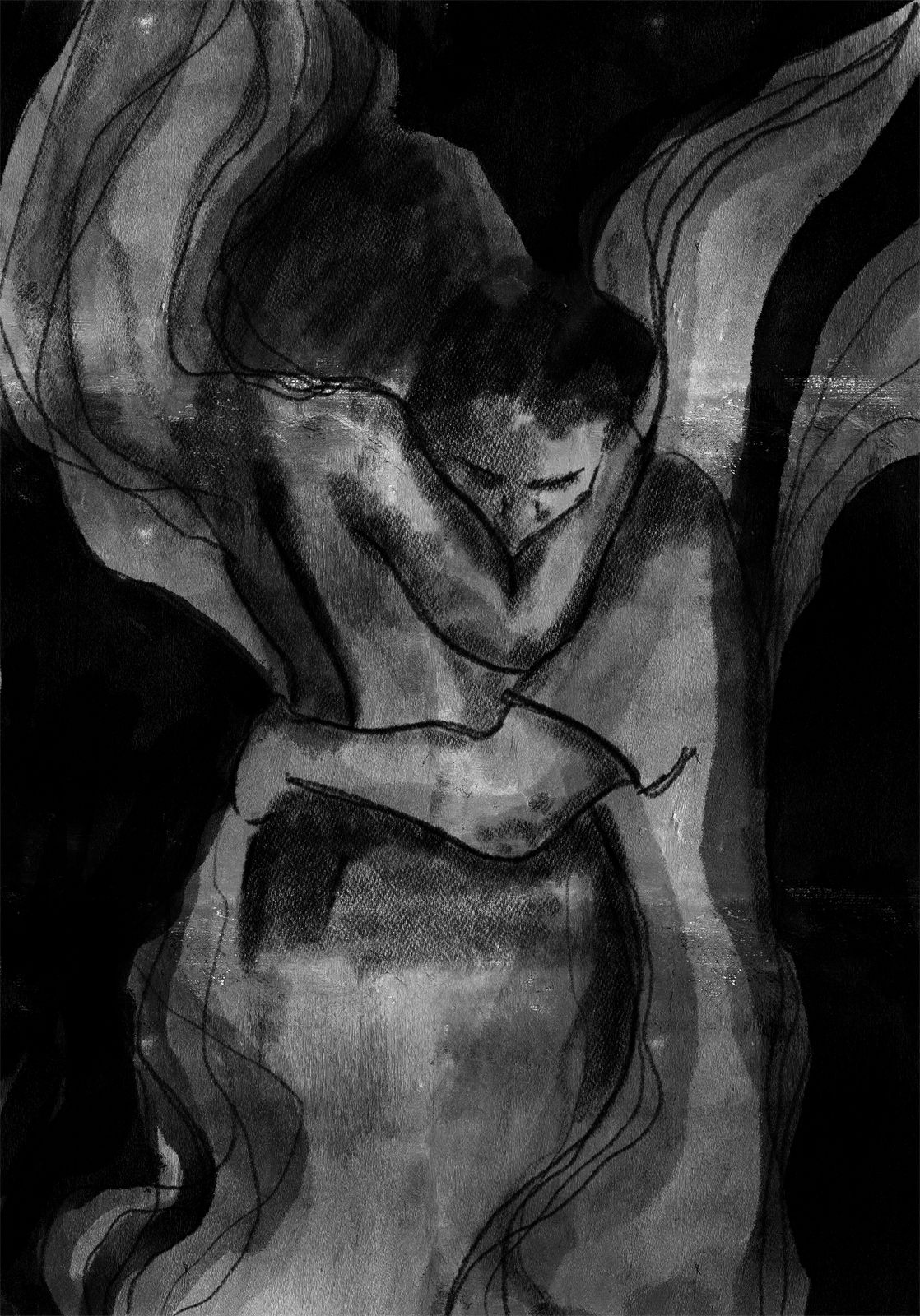
“ahogarte en una canción que dure para siempre..”
“drowning in a song that lasts forever..”
Chapter 12: Gray
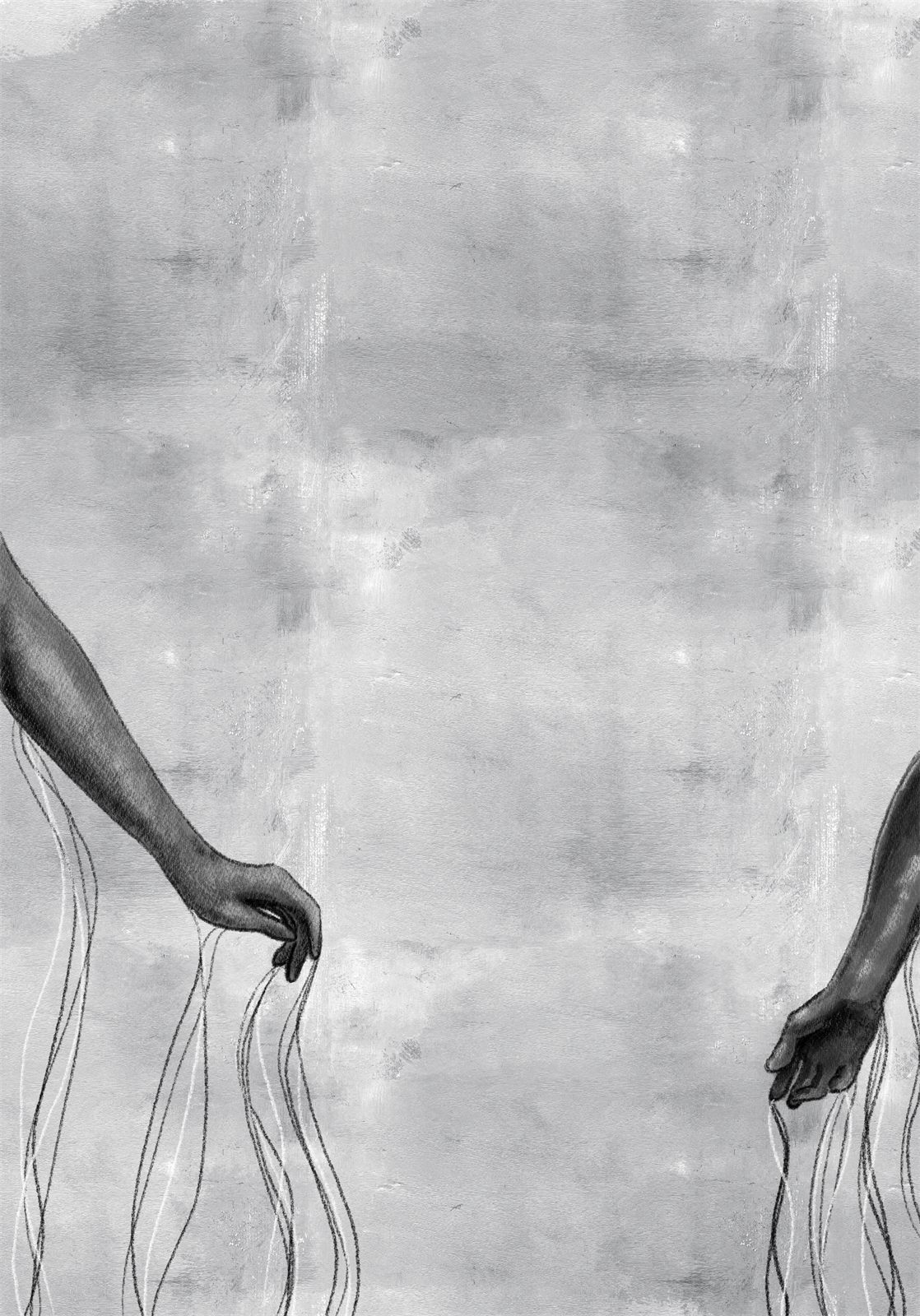
“¿Por qué tienes que construir algo tan hermoso solo para destruirlo? Qué sentido tiene de todas maneras.”
“Why do you have to build something so beautiful just to destroy it? What's the point, anyway.”
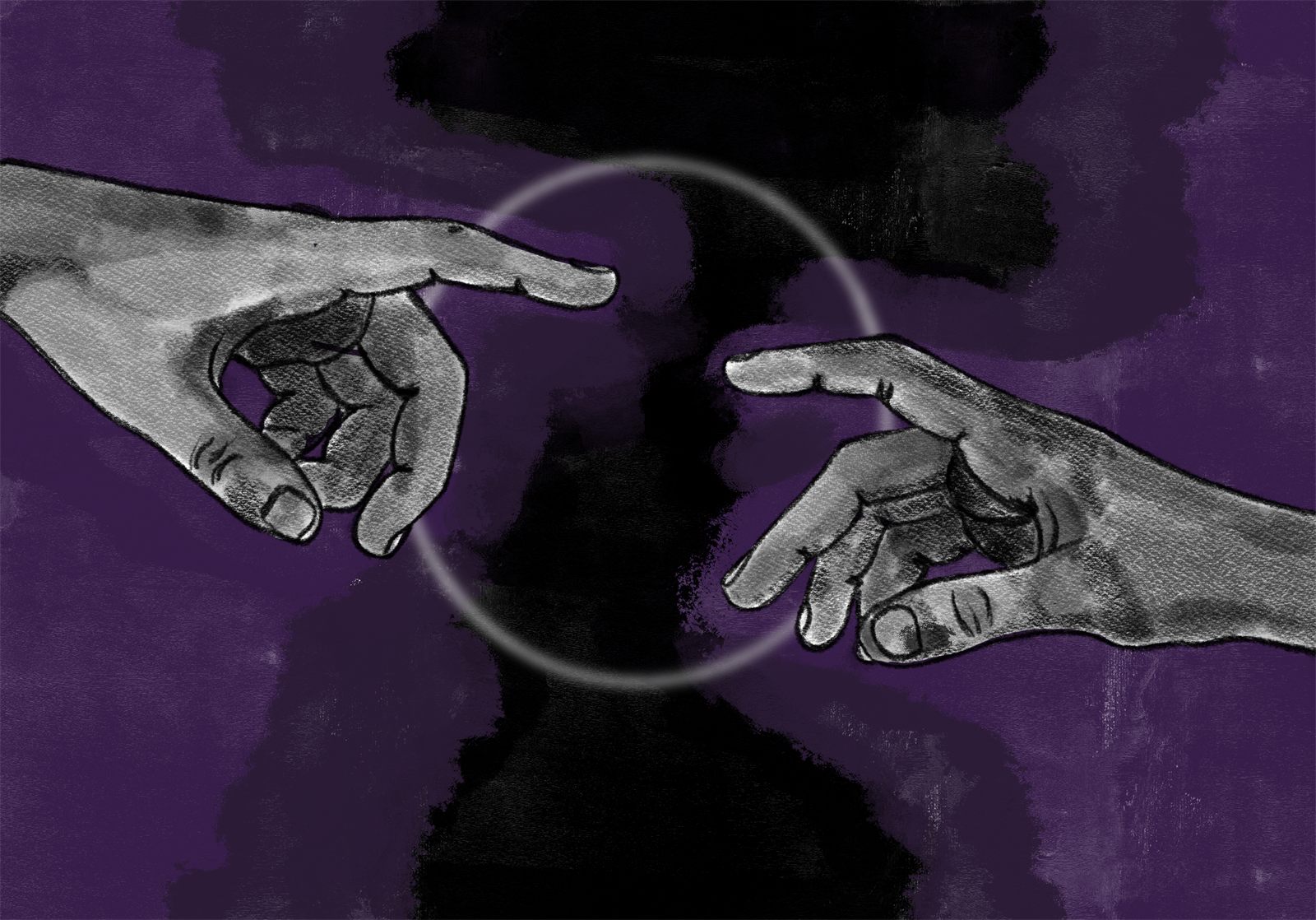
Chapter 13: Purple
“Ya no es un ¿cómo volvemos ahí? Sino un ¿acaso llegué ahí?”
“It's no longer a ‘how do we get back there?’ but a ‘did I even get there?’”
Chapter 14: White
“Si le preguntas a alguien qué es el amor para ellos, lo más seguro es que te den la respuesta más básica en el mundo. Una aburrida y común. Como "es lo más lindo que hay" o "es una conexión muy fuerte entre dos personas" o "es una necesidad del ser humano". O si es que ponen un poco de creatividad al asunto, tal vez te respondan con una sola palabra: "es reponer", "es depender", "es conmover". Y tal vez ninguno está equivocado, pero sus respuestas no tienen sentimiento ni ingenio. Pero ¿qué pasa si cambias la pregunta? Una mejor: ¿De qué color es el amor? Eso lo haría mucho más interesante, ¿no?”
“If you ask someone what love is to them, chances are they'll give you the most basic answer in the world. A boring, common one. Like "it's the most beautiful thing there is" or "it's a very strong connection between two people" or "it's a human need." Or if they put a little creativity into it, maybe they'll answer with a single word: "it's replenishing," "it's depending," "it's being moved." And maybe none of them are wrong, but their answers have no feeling or wit. But what happens if you change the question? A better one: what color is love? That would make it a lot more interesting, wouldn't it?”
Chapter 15: Orange
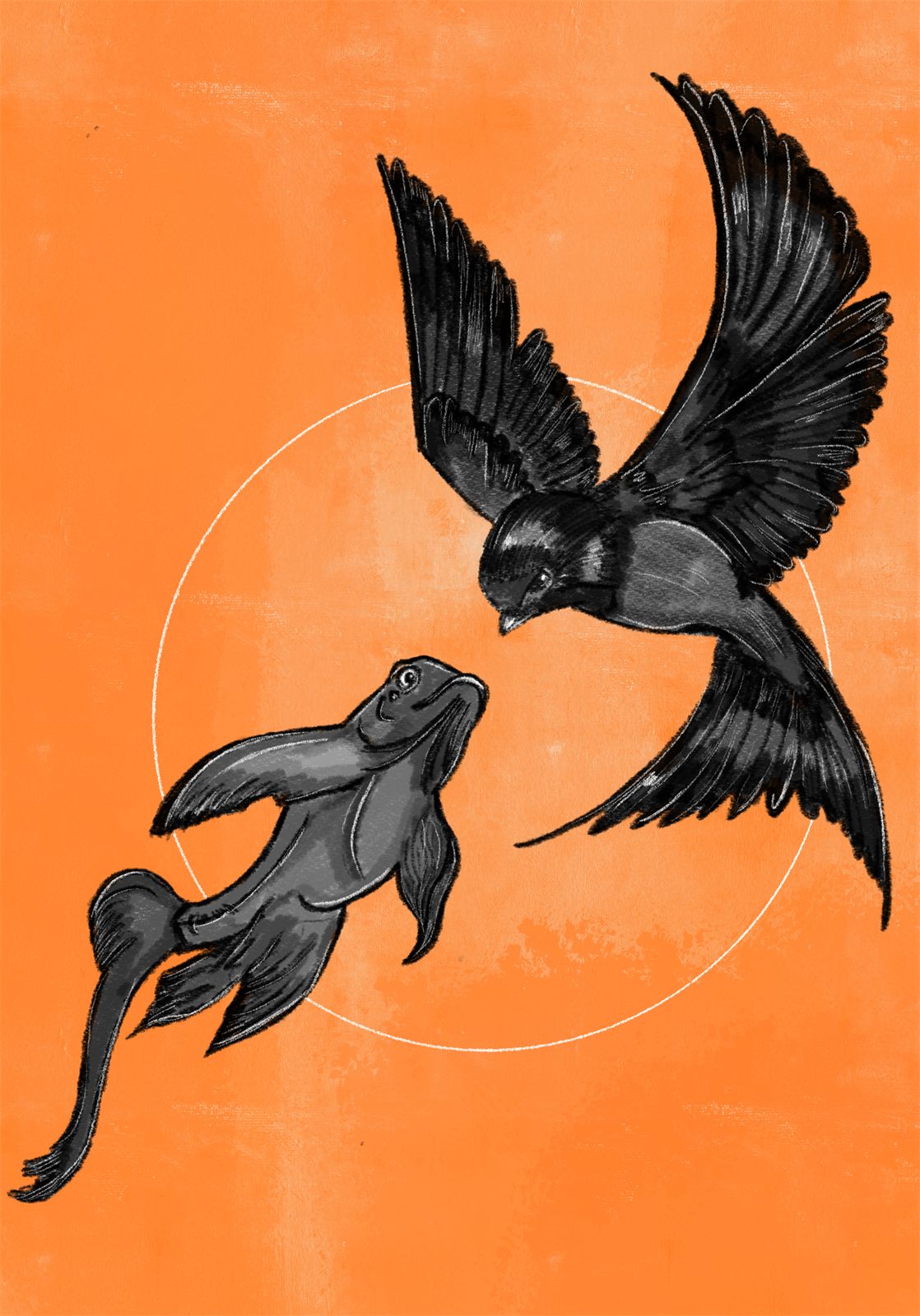
“Había una vez un pájaro y un pez.”
“Once upon a time there was a bird and a fish.”